Sunday, June 10, 2007

Colonial Theatre - Boston

A while ago Robert Field (UK) asked if I knew about the mosaics in Boston's Colonial Theatre. He was researching Ludwig Oppenheimer Limited a mosaic firm established by Oppenheimer in 1865 in Manchester, England. The firm worked on several major projects in Ireland and England until 1965. Bob mentioned that the Colonial Theatre was the only project done in the United States.

It took a while, but we finally got into the theatre and found the mosaics in the lobby. The design is a frieze of Pompeian-style masks that circumnavigates the room. The main part of the floor is an interestingly irregular opus circumactum.

I can only imagine the thousands of people who go to productions at the theatre and don't even notice this incredible floor.

I posted our photos on the Mosaic Atlas.


(If you've never been to Robert Field's website, do so. He is in my pantheon of mosaic gods. )

Friday, June 8, 2007

A mosaic unlike any you've ever seen...

This is Sophie's latest mosaic. It is unlike any that you've ever seen. Can you tell what it is? (Scroll down to find out.)


In the meantime, here are photos of the finished Cohen hearts floor.


Sophie did the medallion. The fan pattern in the rest of the floor was fabricated in Italy.

Here's Sophie:

"Those marble fan modules are pretty impressive, and the last bit of polishing has made a huge difference in the entire floor. Boy, I’ve sure learned a lot being around while this floor has come to life. First and foremost, it takes a lot of people (and money) to make it happen, and it takes people who really know what they are doing for installation."

And now - drum roll - here is Sophie's mosaic under a black light.


It's title is Ghoti (pronounced "fish").

Thursday, June 7, 2007

War Memorial Update (Connie English)

Connie recently installed her "Daughter" cross at the War Memorial in Lafayette, California. Here's her story:

A few weeks ago I had a conversation with Nadia McCaffrey, about her 6 year old granddaughter, Janessa, who lost her father Patrick (3 years ago) in this war.

This cross is therefore dedicated to Janessa, as her story inspired me to create a cross to represent "all" daughters; the parents of women soldiers, the women themselves and the daughters of soldiers killed in War.

Connie plans to do more of these and will start looking for sponsors. Half of the proceeds will go to a non-profit for soldiers recovering from the war. I'll keep you posted as I find out more.

Wednesday, June 6, 2007

Here come the suns....

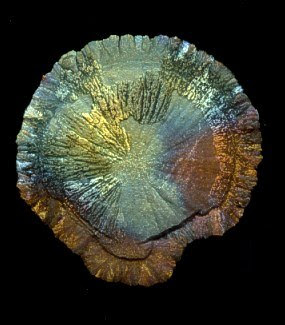
We recently visited our source for pyrite suns. He just got back from a trip where he picked up hundreds of them. We were blown away at this batch. The colors in the iridized ones were spectacular - unlike any I've ever seen before. I recently posted them in the Mosaic Rocks shop. Look for them starting at the bottom of the page.

One friend who received a few of these said:

"The pyrite suns came in yesterday. Bill, they are stunning. I was going to do some mosaic Christmas presents featuring them, but I’m not sure I can let them go. In the sun they shimmer in a thousand different colors."


No one really knows what these things are. Pyrite suns are found in one location in the world - a coal mine in Illinois.

People originally thought that these were some type of fossils. The current thinking is that they are pyrite crystals that grow in the seams of coal or shale layers. Since coal is so dense and hard, the crystals can only grow horizontally out. Here's a photo of how they look embedded in the shale.
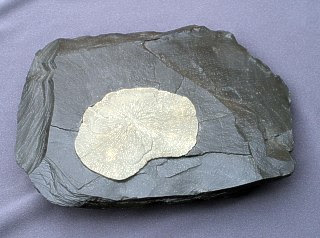
The sun in the above photo has been cleaned. Usually, they come out of the ground looking something like this - only worse.
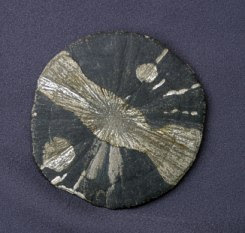
Irina Charny sent this one to me. She purchased a number of uncleaned suns a while back. They came encrusted the dark mineral - probably coal or shale. She said she tried everything in the book to clean them up, spending hours scrubbing them. Eventually she discovered that Diet Coke worked best. Who would have thought? Imagine what that stuff does in your stomach.
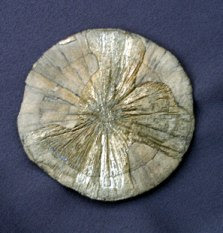

This is the other side of the same sun - the side she cleaned. Big difference!

Now for the big mystery/secret. There are a few people who clean suns and then put them through some process to tint and/or iridize them. Apparently, this process is a well kept secret. The person who cleans the suns for our dealer told him that someone recently paid $10,000 to get the recipe. It's hard to imagine that it's worth it. I think pyrite suns are very reasonably priced given that they are so rare.

I expect that the silver ones are close to the natural color. Pyrite has a silver/gold color. Natural or not, these iridized ones are just spectacular. Here are some more photos of ones from Mosaic Rocks.
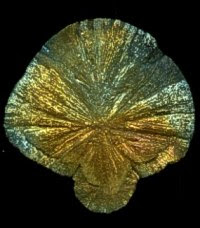

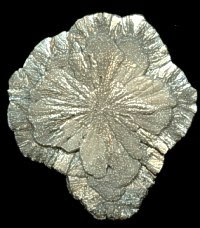
Sonia King is the queen of pyrite suns and needs to be given credit for making them so popular in mosaics. If you haven't see her mosaics, check out the galleries on her website. I asked her if the tinted/iridized suns will lose color over time. She said she hasn't noticed any color loss over the years. Then again, her mosaics aren't that old.

I expect that thousands of years from now when archaeologists are digging up our mosaics, they'll come across these suns and wonder why we used such colorless things in them. But for our lifetimes we can enjoy these magnificent colors.

Tuesday, June 5, 2007

Rock Stars Julie Richey and Lynne Chinn

Julie Richey and Lynne Chinn are rock stars in the truest sense. They recently collaborated on a kitchen project for a client. Julie designed this incredible backsplash based on the clients' love of the Lascaux caves in France. In it she used marble (including some Mosaic Rocks marble) and a tiny bit of eco smalti.


Lynne designed these pieces based on images from New Grange, Ireland. Julie cut the stone opus sectile style on her DL 5000; Lynne inlaid the Bisazza.


Halfway through the longest horizontal piece, Julies DL motor fried and she had to finish it with her hammer and hardie! She said she actually like that part a lot more than if it had been opus sectile.

Monday, June 4, 2007

Luke - Still no hair

After last weekend's hair-razing experience, I decided to work on easier portions of Luke's body: his ear and neck. He's starting to look like a real person - not just a face floating in a void. The ear looks somewhat funny because it's hanging out there, but I expect that it will blend in when I make my next attempt at doing his hair.

Necks are interesting. There is a lot going on in a neck - movement and shadow.

First of all, note the line of tesserae that separates the left side of his beard from his neck (his right - your left). This line also extends down the side of his neck and even breaks out into the neck. The effect is nice, providing a definitive separation between the head and the neck by creating a slight shadow effect. I used a pale green stone for this - the only place in the mosaic where this color occurs. Green was typically used in Byzantine portraits.


One problem I did have was the andamento of the lighter neck stones around this line. There was too much of a noticeable angle in making the corner. This probably occurred because I placed the green line of stones first and then filled in the lighter stones. (This is what happened when I worked on the hair. I started with the strongest line and then tried to fill in the shading around it.)


So I ripped out the stones in this area and built the curved line of lighter stones first. This time I used larger pieces which I think help balance the smaller pieces closer to his beard. The first attempt had too many distinct rows of thinner stones which drew unneeded attention to it.

Once the curved line of lighter stones was in, I rebuilt the stronger line of green stones. The result looks much better.

The hair is next; can't avoid it now. And following the advice of that wise Texan sage, I will pour myself a glass of Vin Santo and dip a few biscottini di Prato before tackling it.

Ultimately I need to decide on the materials to use for the background. Any suggestions?

Friday, June 1, 2007

Mosaic Exhibition

CALL FOR NEW ENGLAND MOSAIC ARTISTS

New England mosaic artists are invited to submit an application for exhibiting their work in an all-mosaic exhibition to be held at the Somerville Museum (Massachusetts), September 6 through October 6, 2007. This exhibition is a first for the Boston area and offers an extraordinary opportunity to expand the understanding and appreciation of contemporary mosaic art in the northeast.

This is an open call for mosaic artists living in Connecticut, Maine, Massachusetts, New Hampshire, Rhode Island, and Vermont. There is a $30 submission fee and a 20% commission for the Somerville Museum collected on sold artwork.

The Prospectus and Submission Form can be found at:
http://www.exhibition.mosaicrocks.com/

Submission Deadline: June 30, 2007

Please help us spread the word by forwarding this Call for Mosaic Artists to your fellow mosaic artists who live in New England.